
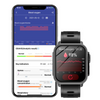
Monitoring blood oxygen levels is essential for your health. In this article, we'll delve into the world of blood oxygen monitor watches, exploring their accuracy.
In recent years, wearable technology has taken significant strides in the realm of health and fitness monitoring. Among the many features integrated into modern smartwatches, one that has gained considerable attention is the ability to track blood oxygen levels. These watches, often referred to as "blood oxygen tracker watches," offer users valuable insights into their overall health and can play a crucial role in tracking patterns like nighttime breathing pauses. In this article, we'll delve into the world of blood oxygen tracker watches, exploring their capabilities, accuracy, and the benefits they offer.
What Is Blood Oxygen?
Blood oxygen, often referred to as blood oxygen saturation or SpO2, is a crucial physiological parameter that tracks the amount of oxygen carried by red blood cells in your circulatory system. In simple terms, it indicates how effectively your body is delivering oxygen to its various tissues and organs. Oxygen is essential for the proper functioning of cells and tissues in your body. It plays a pivotal role in energy production, and without an adequate supply of oxygen, cells can't perform their functions optimally. Therefore, maintaining an appropriate blood oxygen level is vital for overall health and well-being.
Why Should We Track Blood Oxygen?
Tracking blood oxygen levels is essential for several reasons:- Respiratory and Circulatory Health: Blood oxygen levels are a critical indicator of your respiratory and circulatory health. Low oxygen saturation levels can indicate problems with lung function, heart function, or blood circulation.
- Early Detection of Health Issues: Tracking blood oxygen can help detect health issues at an early stage. Conditions like chronic obstructive pulmonary disease (COPD), asthma, sleep apnea, and heart problems can lead to decreased blood oxygen levels. Identifying these issues early allows for timely intervention and treatment.
- Assessment of Physical Activity: For athletes and fitness enthusiasts, tracking blood oxygen during workouts can help assess the effectiveness of training routines. It provides insights into whether the body is getting enough oxygen during exertion and helps optimize performance.
- Sleep Apnea Detection: Sleep apnea is a sleep disorder characterized by repeated interruptions in breathing during sleep. These interruptions can lead to reduced blood oxygen levels. Tracking blood oxygen during sleep can aid in the early tracking of sleep breathing patterns, allowing for appropriate treatment.
- Altitude and Travel: When traveling to high-altitude regions, the availability of oxygen decreases, which can affect people with underlying health conditions. Tracking blood oxygen levels can help individuals acclimatize to higher altitudes and avoid altitude sickness.
- General Well-Being: Tracking blood oxygen levels can provide individuals with a better understanding of their overall well-being. Consistently low or fluctuating SpO2 readings may prompt individuals to make lifestyle changes or seek medical advice to improve their health.
Can Smartwatches Track Blood Oxygen?
Yes, modern smartwatches can indeed track blood oxygen levels, thanks to the inclusion of specialized sensors. Blood oxygen saturation, often abbreviated as SpO2, is a vital metric that indicates the percentage of oxygen in your blood. It is an essential parameter for assessing your respiratory and circulatory health.
How Does a Smartwatch Track Blood Oxygen?
Blood oxygen tracker watches utilize photoplethysmography (PPG) sensors, which emit light through your skin and measure the amount of light that is absorbed by your blood. Oxygen-rich blood absorbs light differently than blood with lower oxygen levels. By analyzing these variations in light absorption, the smartwatch can calculate your blood oxygen saturation. Most smartwatches take continuous readings throughout the day and night to provide a comprehensive view of your SpO2 levels. This data is then typically displayed in a dedicated app or on the watch itself.
Is Smartwatch Blood Oxygen Accurate?
The accuracy of blood oxygen measurements taken by smartwatches has improved significantly in recent years. However, it's essential to keep in mind that these devices may not be as precise as professional equipment. Factors such as the quality of sensors, the fit of the watch, and user movements can affect accuracy. For most users, blood oxygen tracker watches provide reasonably accurate readings, making them useful for tracking trends and identifying potential health concerns. If you have specific medical conditions or require highly accurate measurements, it's advisable to consult a healthcare professional and use professional equipment.
The Significance of Blood Oxygen for Sleep Apnea Monitoring
One of the critical applications of blood oxygen tracker watches is in the detection and monitoring of sleep apnea. Sleep apnea is a condition characterized by repeated interruptions in breathing during sleep, which can lead to reduced blood oxygen levels. Normal blood oxygenation is at 90%- 95%. An breathing pause can drive that level into the 80's% or even 70's%. These levels of oxygenation are damaging and dangerous! An breathing pause occurs when someone is in deep or dreaming (REM) sleep. By continuously tracking blood oxygen saturation throughout the night, blood oxygen tracker watches can help identify episodes of low oxygen levels and Issue an alarm in time.

Benefits of Blood Oxygen Tracker Watches
- Health Tracking: Blood oxygen tracker watches provide valuable insights into your overall health. Tracking your SpO2 levels can help you identify potential issues with your respiratory and circulatory systems, enabling early intervention if necessary.
- Sleep Tracking: These watches offer comprehensive sleep tracking, allowing you to assess the quality of your sleep, detect sleep disorders like sleep apnea, and make adjustments to improve your sleep patterns.
- Fitness Optimization: Blood oxygen data can be useful for athletes and fitness enthusiasts. Tracking oxygen levels during workouts can help optimize training routines and monitor recovery.
- Peace of Mind: For individuals with known health conditions or those at risk of low oxygen levels, wearing a blood oxygen tracker watch can provide peace of mind, as it continuously monitors their vital signs.
- Convenience: Blood oxygen tracker watches are compact, wearable, and unobtrusive, making them a convenient tool for health tracking that fits seamlessly into daily life.
In conclusion, blood oxygen watch has become an integral part of the wearable technology landscape, offering users a convenient and accessible way to track their blood oxygen levels. While they may not replace professional equipment in all situations, they provide valuable insights into overall health, facilitate early detection of health issues, and offer a range of benefits for those seeking to optimize their well-being. As technology continues to advance, we can expect even more accurate and sophisticated health tracking features in the smartwatches of the future.
Blog Posts
-

, by Fitaos Team Two Health Smartwatches, One Order: Inside the RIG + VEE Bundle ($99.99)
Two Health Smartwatches, One Order: Inside the RIG + VEE Bundle ($99.99) -

, by Fitaos Team The V8 Smart Ring Bundle: A Flagship Ring, Its Charging Case, and a Second ECG Smartwatch — for $139.99
The V8 Smart Ring Bundle: A Flagship Ring, Its Charging Case, and a Second ECG Smartwatch — for $139.99 -

, by Fitaos Team Tracking Blood Glucose Trends on Your Wrist: A Beginner's Guide
Tracking Blood Glucose Trends on Your Wrist: A Beginner's Guide


